Asking for a Newer Gout Drug and Hearing No: The Clinical and Financial Logic Behind Your Doctor's Decision
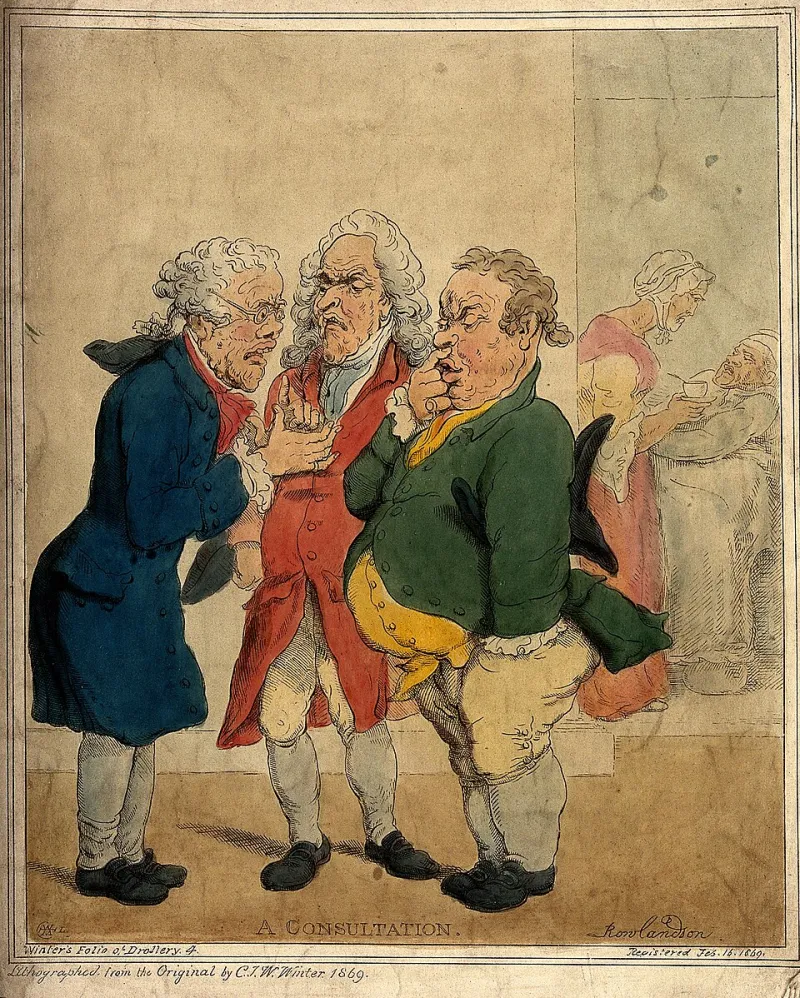
Photo: Unknown, CC BY 4.0, via Wikimedia Commons
It is a scenario that plays out in rheumatology and primary care offices across the United States every day. A gout patient—frustrated by a recent flare, curious about a television advertisement, or simply convinced that newer must mean better—asks their physician about switching from allopurinol to a more recently developed medication. The physician listens, reviews the chart, and declines. The patient leaves with the same prescription they came in with and very few answers.
That gap between what patients want and what physicians prescribe is not arbitrary. It reflects decades of accumulated clinical evidence, a complex web of insurance policies, and a set of risk calculations that rarely get communicated clearly in a fifteen-minute appointment. This article examines each of those factors in detail, so that patients can understand the reasoning—and know when and how to push back.
Why Allopurinol Has Held Its Position for Six Decades
Allopurinol was approved by the U.S. Food and Drug Administration in 1966, making it one of the oldest medications still in routine use for a chronic condition. That longevity is not inertia. It reflects a safety and efficacy profile that has been validated across an extraordinary breadth of patient populations, clinical settings, and decades of real-world use.
The drug works by inhibiting xanthine oxidase, the enzyme responsible for converting purines into uric acid. By reducing uric acid production at its source, allopurinol lowers serum urate levels steadily over time, allowing monosodium urate crystals to dissolve from joints and soft tissues. When titrated appropriately to a target serum uric acid below 6 mg/dL—or below 5 mg/dL in patients with tophaceous gout—it is highly effective for the majority of patients.
Critically, allopurinol is also inexpensive. Generic formulations are available at most U.S. pharmacies for a fraction of the cost of newer agents, and it appears on virtually every major insurer's formulary at the lowest cost-sharing tier. For a chronic condition that requires indefinite medication use, cost is not a trivial consideration.
The Newer Alternatives: What They Offer and What They Cost
The two principal alternatives to allopurinol that patients most commonly inquire about are febuxostat (brand name Uloric) and pegloticase (brand name Krystexxa).
Febuxostat, approved in 2009, also inhibits xanthine oxidase but does so through a different molecular mechanism and is not renally cleared in the same way as allopurinol. This makes it appealing for patients with moderate chronic kidney disease, who may not tolerate standard allopurinol doses. However, a landmark clinical trial—the CARES trial, published in 2018—found that febuxostat was associated with a higher rate of cardiovascular mortality compared to allopurinol in patients with established cardiovascular disease. That finding prompted the FDA to add a black box warning to febuxostat's labeling, a development that substantially narrowed the population for whom most physicians consider it appropriate. Beyond the safety concern, febuxostat carries a significantly higher price tag and faces step-therapy requirements from most commercial and Medicare Part D plans, meaning insurers will typically not cover it unless allopurinol has been tried and documented as insufficient.
Pegloticase occupies a different clinical niche entirely. It is a biologic agent administered intravenously every two weeks, designed for patients with severe, refractory gout who have failed or cannot tolerate conventional oral urate-lowering therapies. It is extraordinarily effective in that narrow population—capable of rapidly dissolving large tophaceous deposits—but it carries risks of infusion reactions, a high rate of immunogenicity leading to loss of efficacy, and an annual cost that can exceed $200,000. It is not a substitute for allopurinol in the general gout population; it is a last resort for a small subset of patients with the most advanced disease.
The Insurance Architecture That Shapes Your Options
Even when a physician might consider a newer agent clinically reasonable, the insurance landscape frequently intervenes. Most U.S. health plans employ a practice known as step therapy—sometimes called "fail first" protocols—that requires documented failure of a preferred medication before they will authorize coverage of a more expensive alternative.
For gout medications, this almost universally means that allopurinol must be tried, titrated to an adequate dose, and shown to be either ineffective or poorly tolerated before a plan will consider covering febuxostat. The documentation requirements can be substantial, and the prior authorization process adds administrative burden for both the patient and the physician's office. Even after authorization, cost-sharing for febuxostat under many plans remains significantly higher than for generic allopurinol.
Physicians are aware of this architecture. When a patient requests a switch without a clinical reason that satisfies step-therapy criteria, the physician may be calculating—accurately—that the request will be denied by the insurer regardless of what they write on the prescription pad. Declining to initiate a futile prior authorization process is not indifference; it is a practical recognition of how coverage decisions are made.
When the Request for a Change Is Clinically Justified
None of the above means that allopurinol is the right medication for every patient indefinitely. There are legitimate clinical circumstances in which a transition to a different agent is appropriate, and patients should understand what those circumstances look like.
Severe allopurinol hypersensitivity—a rare but potentially life-threatening reaction involving skin and internal organs—is an absolute contraindication to continued use. Patients who carry the HLA-B*5801 genetic variant, which is more prevalent in certain Asian populations, are at substantially elevated risk for this reaction, and genetic screening prior to initiation is now recommended for high-risk groups. Patients with advanced chronic kidney disease who cannot safely reach therapeutic allopurinol doses may also be candidates for alternative therapy. And patients with truly refractory tophaceous gout, who have failed adequate trials of conventional therapy, may ultimately be appropriate candidates for pegloticase.
If you believe your situation fits one of these categories, the most effective approach is to come to the appointment prepared. Bring documentation of your current dose, your serum uric acid trend over time, a list of flares you have experienced, and any relevant comorbidities. Ask your physician specifically what clinical threshold would prompt reconsideration, and request a referral to a rheumatologist if your primary care physician does not specialize in gout management. Rheumatologists are more likely to have experience navigating prior authorization for specialty gout therapies and can provide the documentation that insurers require.
The Conversation Worth Having
The persistence of allopurinol as the cornerstone of gout pharmacotherapy is not a failure of medical progress. It is a reflection of what the evidence actually shows: a medication that is safe, affordable, and effective for the substantial majority of patients when used correctly. Newer drugs have earned specific roles in specific populations, but they have not supplanted a treatment that continues to deliver results at a fraction of the cost and with a longer safety record than any alternative.
What patients deserve—and do not always receive—is a clear explanation of that reasoning. If your physician has declined to switch your medication, asking them to walk through the clinical and coverage logic is entirely appropriate. Understanding the decision does not mean accepting it without question; it means being equipped to participate meaningfully in a conversation about your own care.